Duaction: Guide to Learning by Doing in the Digital Age
Education is evolving at an unprecedented pace. Traditional classrooms, long lectures, and textbook memorization are no longer sufficient for the demands of the modern world. Today’s learners require skills, adaptability, and real-world experience. This need has given rise to new educational philosophies that prioritize action and practical application over passive study. One of the most transformative models emerging in this context is Duaction.
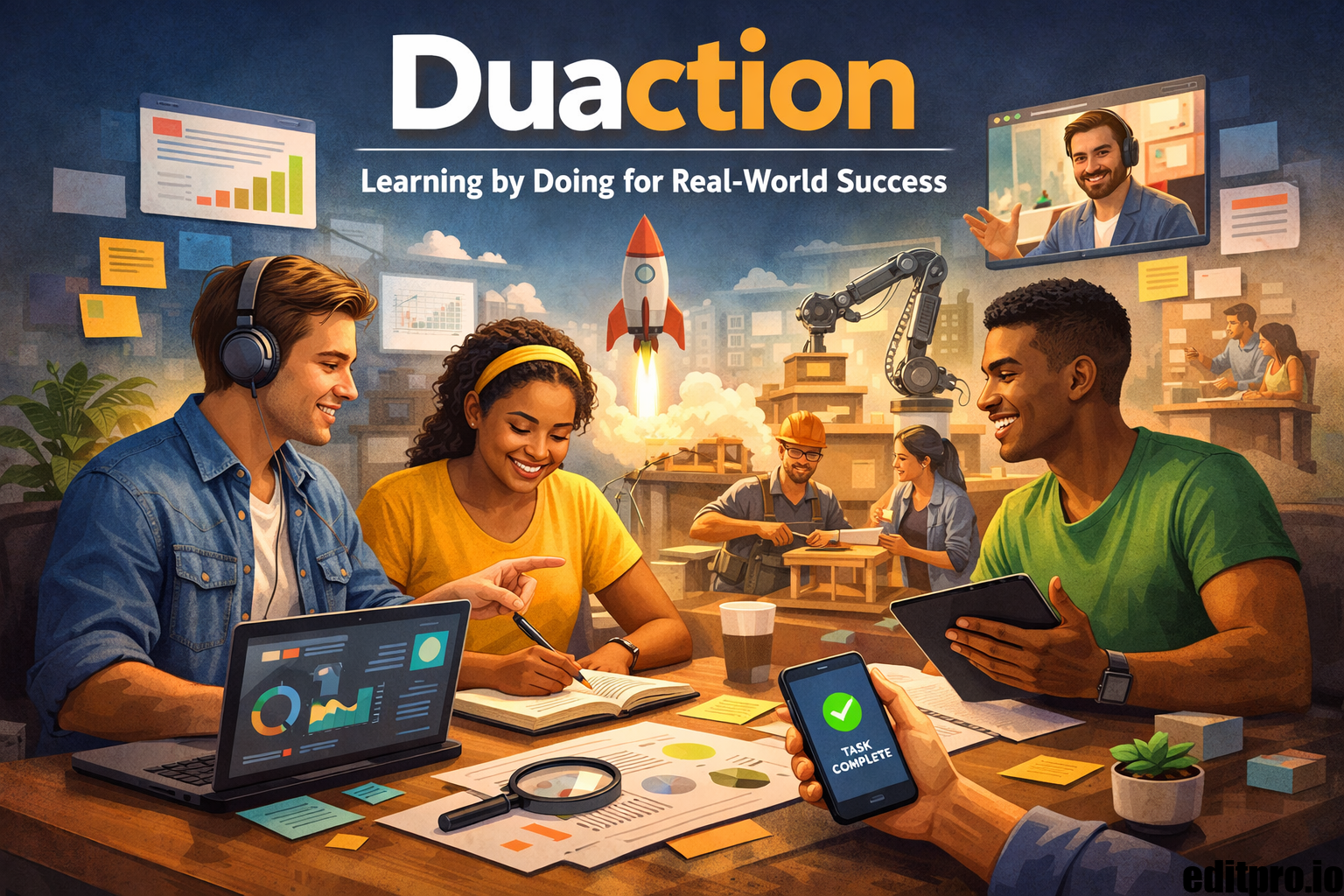
Du-action is a fusion of “doing” and “education.” It emphasizes applying knowledge as it is learned, enabling students, professionals, and entrepreneurs to gain real-world experience while mastering new concepts. This philosophy bridges the gap between theory and practice, making learning meaningful, engaging, and directly relevant to professional and personal growth.
Understanding Duaction
The term Du-action combines two concepts: “Do” and “Education.” It represents a learning methodology where action and theory occur simultaneously. Unlike traditional education models, which prioritize memorization and exams, Du-action encourages learners to actively engage in tasks, projects, and problem-solving exercises. By merging understanding with execution, learners internalize concepts more effectively, gain confidence, and develop skills that are immediately applicable.
Traditional learning often emphasizes delayed application, where students study theory for months or years before encountering practical scenarios. Duaction removes this delay, allowing learners to experience real-world challenges and refine their skills in the process. This approach not only accelerates learning but also fosters adaptability, critical thinking, and resilience.
How Duaction Works
- Engage in Task-Based Learning
Learners actively participate in real tasks and projects from the start, turning theoretical knowledge into practical skills. For example, a digital marketing student might run actual campaigns while studying analytics. - Participate in Project Simulations and Experiential Tasks
Experiential learning includes simulations, experiments, and collaborative projects. These activities allow learners to apply skills in realistic contexts, test strategies, and learn through trial and error. - Receive Continuous Feedback and Mentoring
Guidance from mentors, performance tracking dashboards, and task evaluations ensure that learners reflect on their actions, learn from outcomes, and continuously improve. - Apply Knowledge Immediately
Instead of delaying application until after training, learners practice concepts in real-world scenarios. This bridges the gap between theory and execution, reinforcing learning effectively. - Iterate and Adapt
Learners refine strategies based on results and feedback, creating a cycle of improvement. Each iteration deepens understanding, strengthens skills, and builds confidence in decision-making.
Key Features of Duaction
Du-action stands out as a modern learning approach because of its unique features that blend practical application with skill development. These features ensure that learners not only understand concepts but also apply them in real-world contexts.
Project-Based Learning
Project-based learning is the backbone of Du-action. Instead of passively absorbing information, learners engage in real projects that mirror industry challenges. This approach helps learners see the direct impact of their work and builds skills that are immediately applicable.
Skill Verification Through Tasks
Duaction emphasizes measurable skill development. Learners complete tasks that demonstrate their competencies in practical scenarios. This not only reinforces learning but also provides a portfolio of verified abilities that can be shown to employers or clients.
Digital Collaboration Tools
Modern Du-action integrates digital tools that facilitate teamwork and remote collaboration. Learners can work together on projects, share resources, and communicate efficiently. This mirrors real-world professional environments and prepares learners for collaborative roles.
Live Feedback and Mentoring
Continuous guidance is a critical feature of Duaction. Mentors provide real-time feedback on performance, helping learners correct mistakes, refine techniques, and accelerate skill mastery. This personalized attention ensures that learners grow effectively with each project.
Career-Oriented Training
Every aspect of Du-action is aligned with career readiness. Courses and tasks focus on skills that employers value most, bridging the gap between education and professional expectations. Learners graduate not just with knowledge, but with practical experience that positions them for success.
Who Benefits from Duaction
- Students
Students gain early exposure to practical skills, allowing them to build portfolios and gain confidence before entering the workforce. Du-action helps them understand concepts deeply by applying them in real scenarios. - Professionals
Working individuals can upgrade digital, technical, or creative skills. Du-action enables faster career transitions, improves performance in current roles, and helps professionals stay competitive in rapidly changing industries. - Entrepreneurs
Entrepreneurs can test business ideas, launch initiatives, and manage collaborative projects effectively while learning. Duaction allows them to experiment safely, learn from results, and develop actionable strategies for real-world success. - Freelancers and Online Workers
Freelancers benefit from applying skills immediately in client projects, building verified portfolios, and gaining practical experience. Du-action bridges the gap between learning and earning, especially in digital and remote work environments.
Duaction Versus Traditional Learning
The contrast between Du-action and conventional education is striking. Traditional learning often revolves around theory, memorization, and exams. Progress is measured through grades and certificates, and practical application is delayed until later stages. In contrast, Du-action prioritizes action, problem-solving, and portfolio development. Success is measured by skill acquisition, task completion, and readiness for real-world challenges.
| Feature | Traditional Learning | Duaction Learning |
| Focus | Theory-focused | Practice-focused |
| Learning Style | Passive lectures | Active real tasks |
| Curriculum | Fixed | Adaptive |
| Assessment | Exam-based | Portfolio & performance-based |
| Career Readiness | Delayed | Immediate |
This model ensures learners gain not only knowledge but also the confidence and practical competence required to succeed professionally.
The Role of Technology in Duaction
Technology is the backbone of modern Du-action. Cloud platforms enable learners to access projects and collaborate globally. AI-driven feedback systems, learning dashboards, and video mentoring provide continuous guidance and evaluation. These tools allow learners to track progress, receive insights, and adjust strategies in real time. Remote access ensures that education is not limited by geography, making Duaction scalable and inclusive.
Digital platforms also enhance collaboration, allowing learners to work on joint projects, share resources, and learn from each other. This integration of technology ensures that learning is continuous, interactive, and aligned with industry standards.
Du-action for Career Development
- Skill Proof Instead of Certificates
Duaction emphasizes verified skills over formal degrees. Graduates develop portfolios, work samples, and live project experience that showcase real competence to employers. This practical evidence of skill often outweighs traditional certificates in today’s job market. - Faster Job Placement
Because learners gain hands-on experience during training, they are ready to contribute from day one. Practical portfolios and real-world exposure help graduates secure jobs faster, increasing professional confidence and marketability. - Preparation for Freelancing and Online Careers
Duaction equips learners with the adaptability, execution skills, and client-facing experience needed for freelancing and remote work. Individuals can deliver projects professionally while still learning, bridging the gap between earning and acquiring skills. - Professional Confidence
By applying knowledge in real tasks and receiving continuous feedback, learners build confidence in their abilities. This confidence enhances interview performance, workplace problem-solving, and overall career growth. - Alignment with Industry Needs
Duaction ensures that skills developed are directly relevant to industry standards. This alignment with employer expectations increases employability and prepares learners for future career challenges.
The Psychology Behind Learning by Doing
Action-based learning aligns with human cognitive processes. Performing tasks activates problem-solving regions of the brain, enhances creative thinking, and reinforces memory through muscle and emotional engagement. Decision-making skills improve as learners navigate real challenges, and confidence grows with each successfully executed task. By learning through doing, knowledge is internalized more deeply, retention is strengthened, and skills are mastered more effectively than through passive study alone.
Global Adoption and Trends
Duaction-style learning is gaining traction worldwide. Countries like the United States, United Kingdom, Germany, Canada, Singapore, and Australia are embracing action-oriented models in universities, training institutes, and corporations. The approach aligns with future-ready education trends, emphasizing adaptability, creativity, and skill-based outcomes.
Organizations are increasingly integrating Du-action principles into corporate training programs to enhance productivity, foster innovation, and accelerate employee development. This global shift confirms the relevance and efficacy of action-based learning in contemporary education and professional growth.
Challenges and Limitations
Challenges and Limitations of Duaction
| Challenge | Description | Possible Solutions |
| Self-Discipline Required | Learners must stay motivated and manage time effectively to balance learning and doing. | Set clear goals, create schedules, and follow a structured plan. |
| Digital Access Needed | Requires internet, devices, and online tools to participate fully. | Ensure access to necessary technology; use offline resources when possible. |
| Intensity for Beginners | Simultaneously learning and applying concepts can feel overwhelming. | Start with small tasks, gradually increase complexity, and seek mentorship. |
| Mentorship Requirement | Learners often need guidance to avoid mistakes and maximize learning. | Engage mentors, coaches, or peer review systems to provide support. |
| Not Suitable for All Learning Styles | Some learners may prefer theory-first or traditional methods. | Combine Duaction with complementary methods to accommodate diverse styles. |
Societal and Long-Term Impact
Duaction has implications beyond individual growth. By emphasizing practical skills, it promotes skill-driven economies, empowers youth, fosters entrepreneurship, and reduces unemployment. Learners equipped with real-world competencies can access global work opportunities, contribute to innovation, and drive economic development. In this sense, Du-action represents not just a learning methodology but a social transformation system.
Practical Steps to Get Started with Duaction
Starting with Du-action requires commitment and deliberate practice. Key steps include:
- Select skill-focused courses that align with career or personal goals.
- Apply knowledge immediately through real tasks and projects.
- Document achievements in a portfolio to showcase skills.
- Seek feedback and mentorship to refine techniques and strategies.
- Engage in collaborative projects to develop teamwork and communication skills.
- Reflect and iterate to continuously improve performance and understanding.
Conclusion
Duaction represents a revolution in learning, bridging the gap between theory and practice. By combining action with education, it empowers learners to gain real-world experience, develop confidence, and acquire skills that are immediately applicable. Students, professionals, and entrepreneurs can benefit from faster skill acquisition, career readiness, and personal growth.
As industries evolve and digital careers expand, Duaction stands out as a future-ready educational model. Those who embrace this philosophy today will be better equipped to learn smarter, work earlier, and achieve success faster, making it a cornerstone of modern learning.